


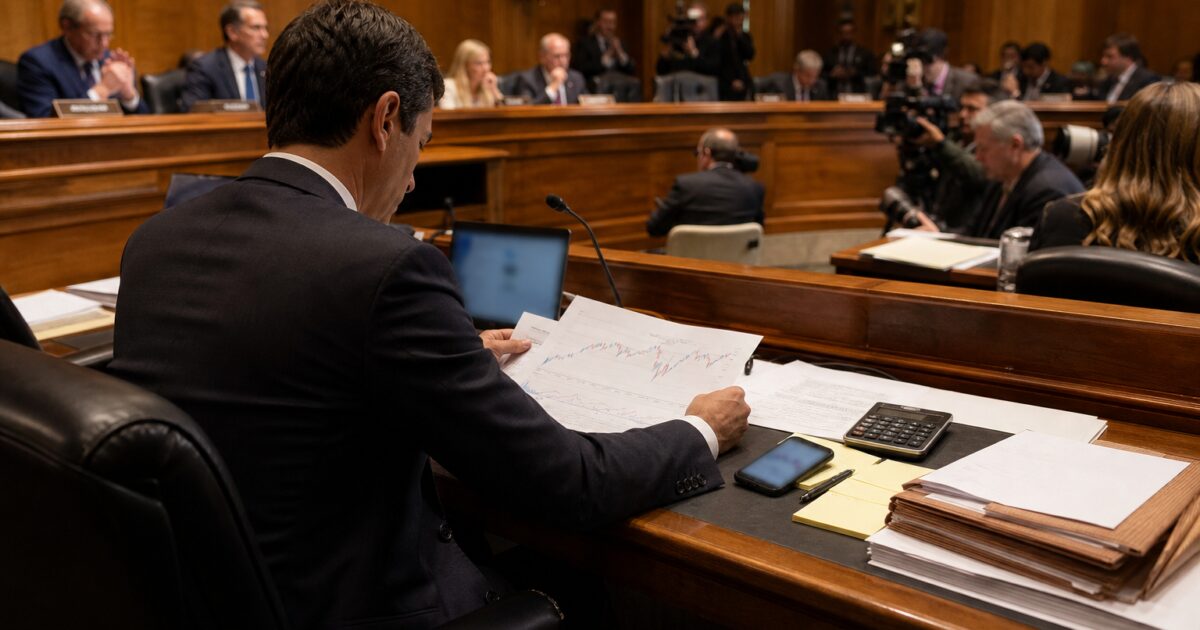
The Senate voted on Tuesday. 51 to 45. Kevin Warsh joins the Board of Governors of the Federal Reserve, and it significantly changes things for the crypto ecosystem. The guy owns shares in Flashnet, a Bitcoin payment company. He also has ties with Bitwise and Basis. Not exactly the usual profile for a Fed governor.
Trump has wanted this name for a long time. Warsh could replace Jerome Powell as early as Friday, following a final vote this week. Powell’s term ends right at that moment. The approval followed party lines, except for John Fetterman, who voted with the Republicans. No one was really surprised by the outcome, but the potential impact on crypto is causing a stir.
A Pro-Bitcoin Governor at the Fed’s Helm
Warsh says Bitcoin is an “important asset.” He sees crypto as an indicator of the Fed’s monetary credibility. This is new. Previous leaders remained skeptical, even hostile. Powell himself has always kept his distance from digital assets, preferring to talk about risks and volatility.
But Warsh thinks differently.
He has repeatedly stated that Bitcoin reflects market confidence in monetary policy. When the Fed prints too much, Bitcoin rises. When austerity returns, investors recalibrate. For him, ignoring this dynamic would be a mistake. Financial markets are closely watching this appointment, looking for clues about the Fed’s future direction concerning digital assets.
His personal portfolio reinforces this view. Flashnet works on instant Bitcoin payment solutions. Bitwise manages crypto ETFs. Basis develops stablecoins. Warsh is not just an observer of the sector; he invests directly in it. Crypto traders see this as a strong signal, even though no one yet knows how he will handle the potential conflict of interest.
Inflation and Rates: Warsh’s Dilemma
The guy has a history of being an inflation hawk. In 2008, after the financial crisis, Warsh criticized the Fed’s accommodative monetary policies. He believed that quantitative easing would create bubbles and destabilize markets in the long term. He was right on some points, wrong on others. But his reputation as a hawk remains.
Recently, he spoke of a “regime change” at the Fed. He also mentioned an openness to lowering interest rates to stimulate the economy. This contrasts with his past positions. Investors wonder if he will stick to this line or return to his usual rigor in the face of current inflationary pressures.
Also read: Kevin Warsh wins Fed governor seat as Democrats fear independence under threat
Geopolitical tensions complicate everything. Trump’s tariffs create price pressures. Energy remains volatile. The dollar fluctuates. In this context, Warsh will have to choose between supporting growth and containing inflation. It’s not yet clear how he will decide, and markets hate uncertainty.
His support for Bitcoin adds a layer of complexity. If the Fed lowers rates, Bitcoin could skyrocket. If it tightens, cryptos could suffer. Warsh knows all this. He owns shares in crypto companies. His decisions will directly affect the value of his own portfolio, raising ethical questions that the Senate did not really delve into during the hearings.
Market players are waiting to see. Some are betting on a more crypto-friendly Fed. Others think Warsh will separate his personal interests from his official duties and maintain a conservative line. We’ll see.
The timing is odd. Powell leaves on Friday. Warsh arrives just as markets are digesting the latest inflation data and trade tensions with China. The transition is happening quickly, perhaps too quickly for some observers who would have preferred more continuity.
The crypto industry is closely following all this. Exchanges, funds, DeFi protocols, all are trying to understand what it means. A Fed led by someone who owns Bitcoin is unprecedented. It could change how the central bank handles digital assets in its reports, regulations, and public statements.
Warsh has already said he sees Bitcoin as a monetary policy indicator. If the Fed starts using crypto as a signal in its analyses, it legitimizes the entire sector at once. Institutional investors who are still hesitant might take the plunge. Regulators might adjust their approaches. All this depends on what Warsh does in his first months.
Fetterman voted for him. That’s notable. The Democratic senator from Pennsylvania doesn’t always follow party lines, but here he clearly chose to support the nomination. No details on his exact motivations, but Pennsylvania has quite a few Bitcoin miners and crypto companies. Perhaps a local political calculation.
The final vote for the presidency is coming this week. If Warsh passes, he takes the reins on Friday. The first speeches, the first rate decisions, all of this will be scrutinized like never before. Crypto traders already have their eyes on the Fed’s calendar for the coming months.
Hub: Bitcoin price, news, and analysis
FAQ
When does Kevin Warsh become Fed chairman?
If the Senate confirms his nomination this week, Warsh takes the chairmanship on Friday, succeeding Jerome Powell whose term ends on that date.
Does Warsh directly own Bitcoin?
The source mentions shares in Flashnet, Bitwise, and Basis, but does not specify if he directly holds Bitcoin in his personal portfolio.
Exodus Dumps 63% of Holdings to Bankroll Push Into Global Payments
How does his appointment affect Bitcoin’s price?
Markets see his pro-Bitcoin stance as potentially bullish, but his decisions on interest rates will have more impact than his personal opinions on crypto.
Post Views: 9




